Day 4 Mildura to Mungo National Park
We left early, and arrived at Mungo Visitor Centre with only 10 mins to spare before our indigenous tour of the “Walls of China” as the sand dune lunettes are called.
It had rained during the night, further eroding this western side of the lunette.
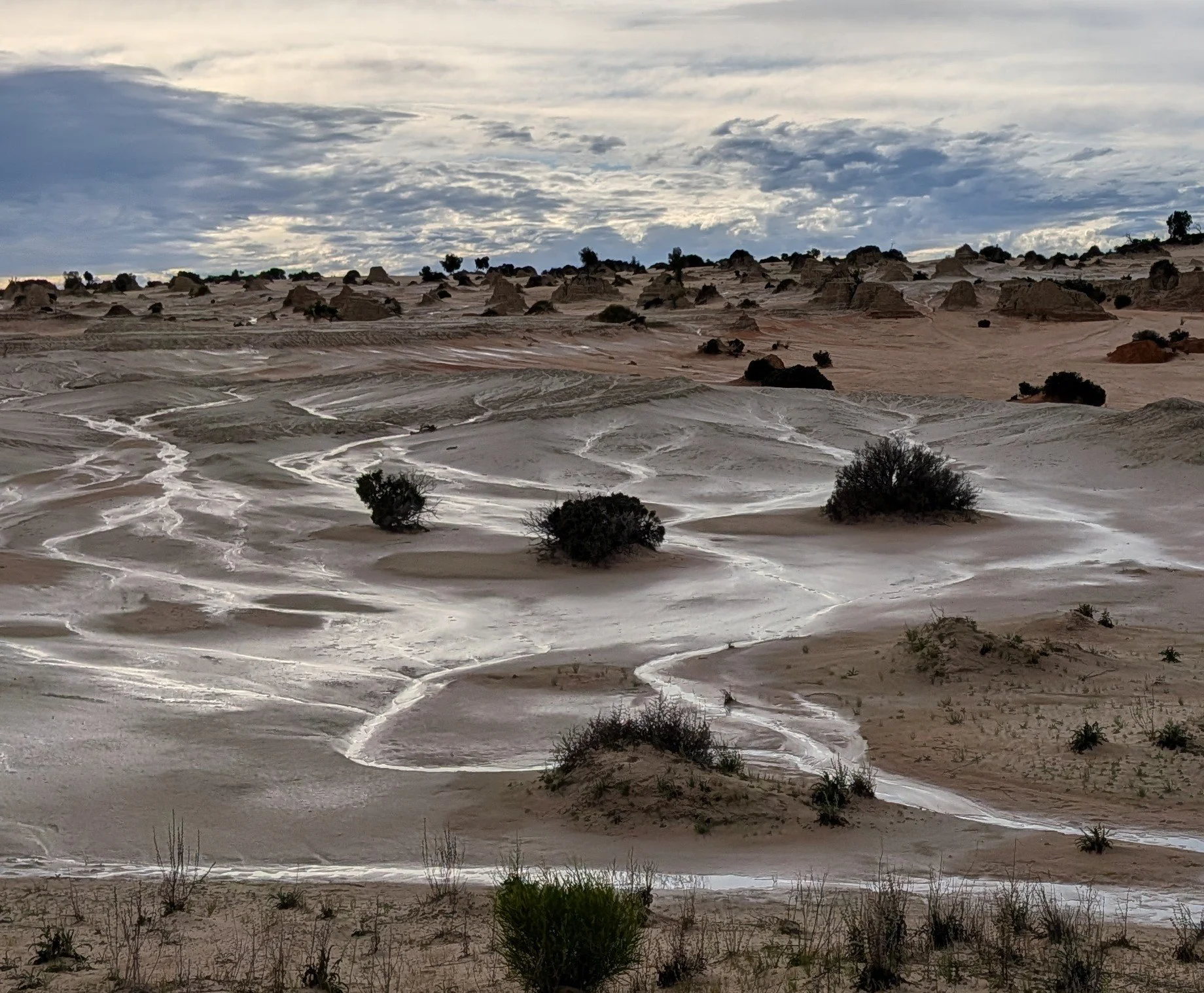
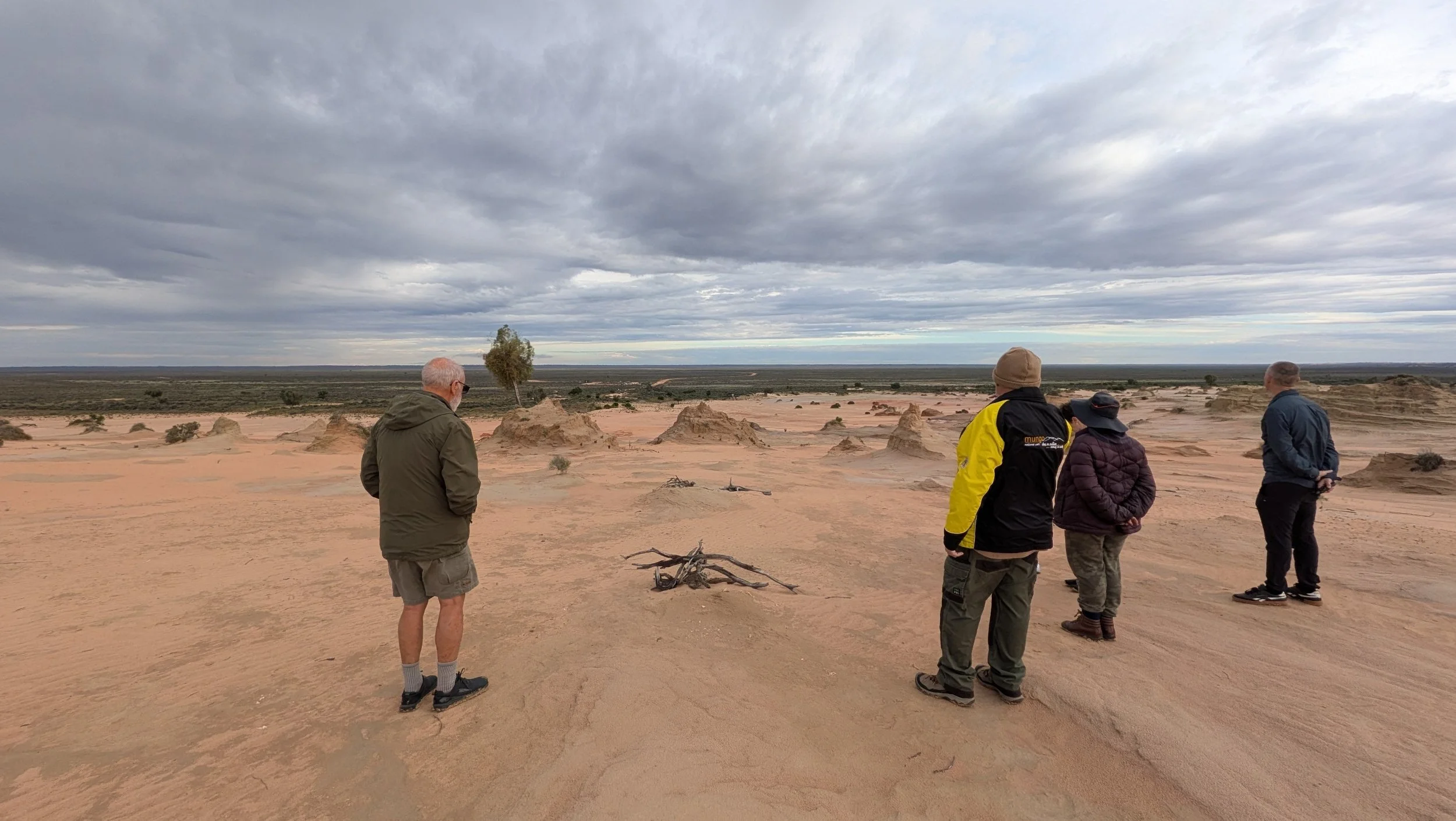
The guide told us that the dunes are moving east at one metre a year. And the soil is too salty to replant the vegetation and trees to slow it.
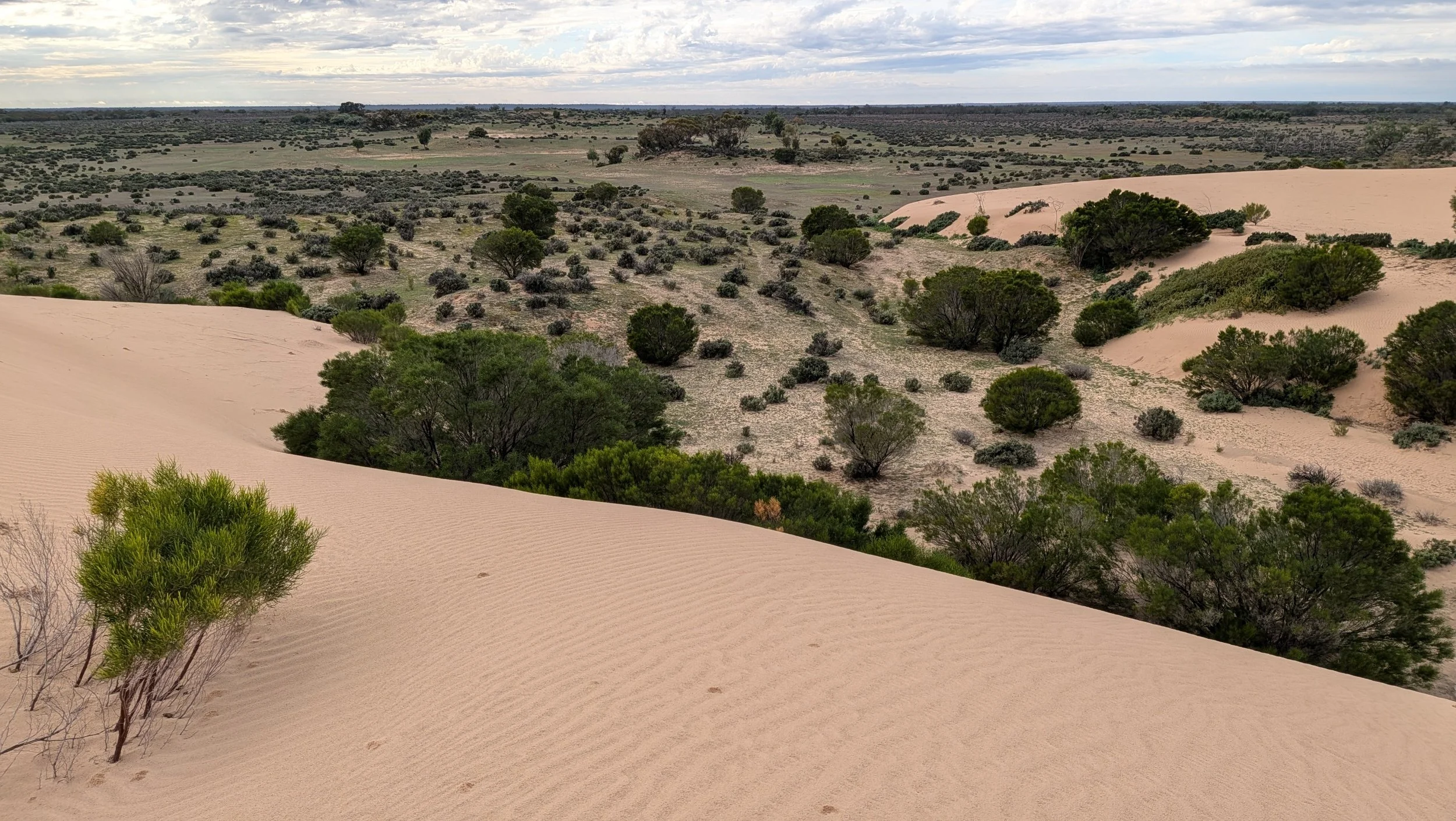
Looking east where the dunes are headed.
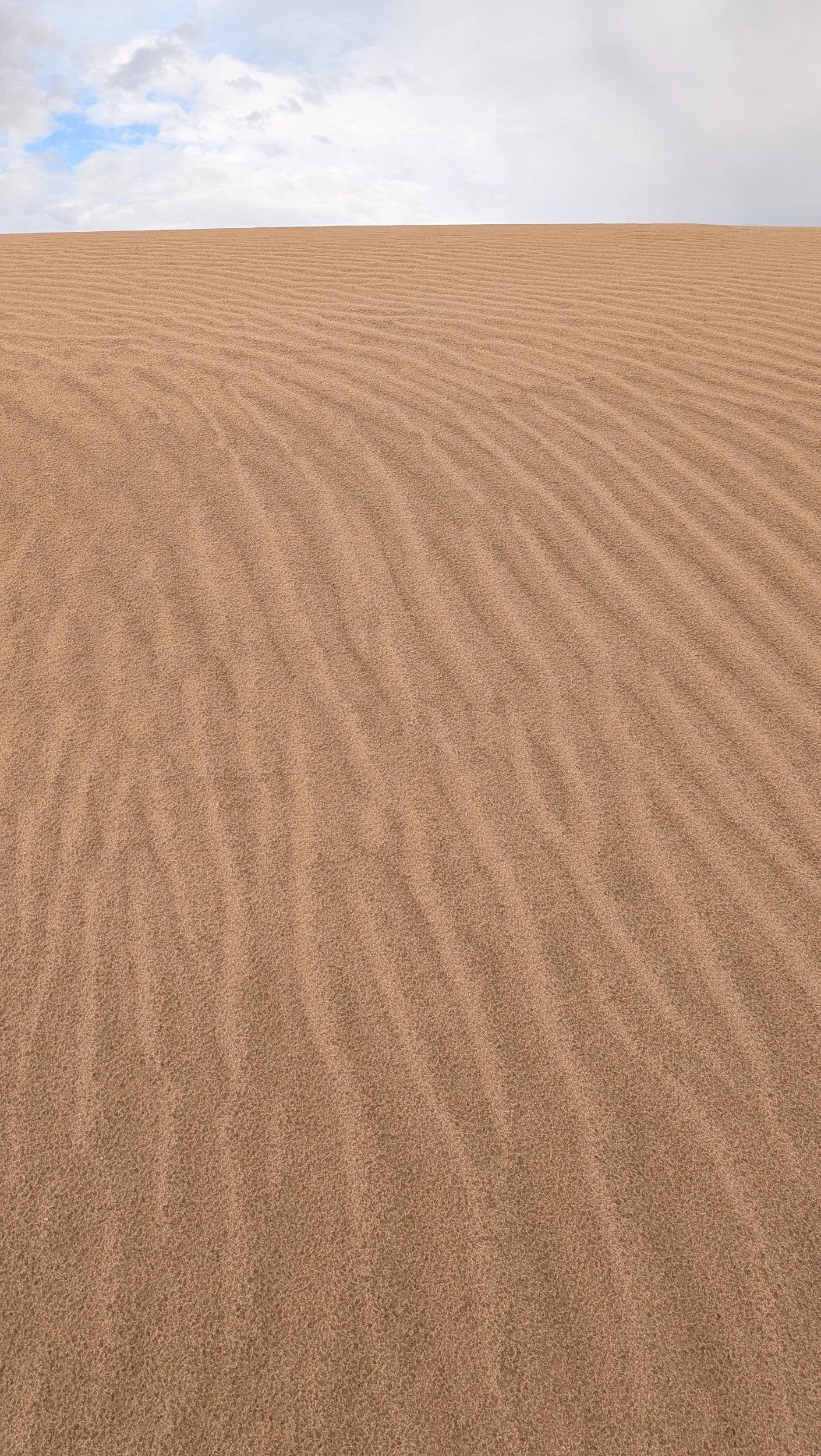
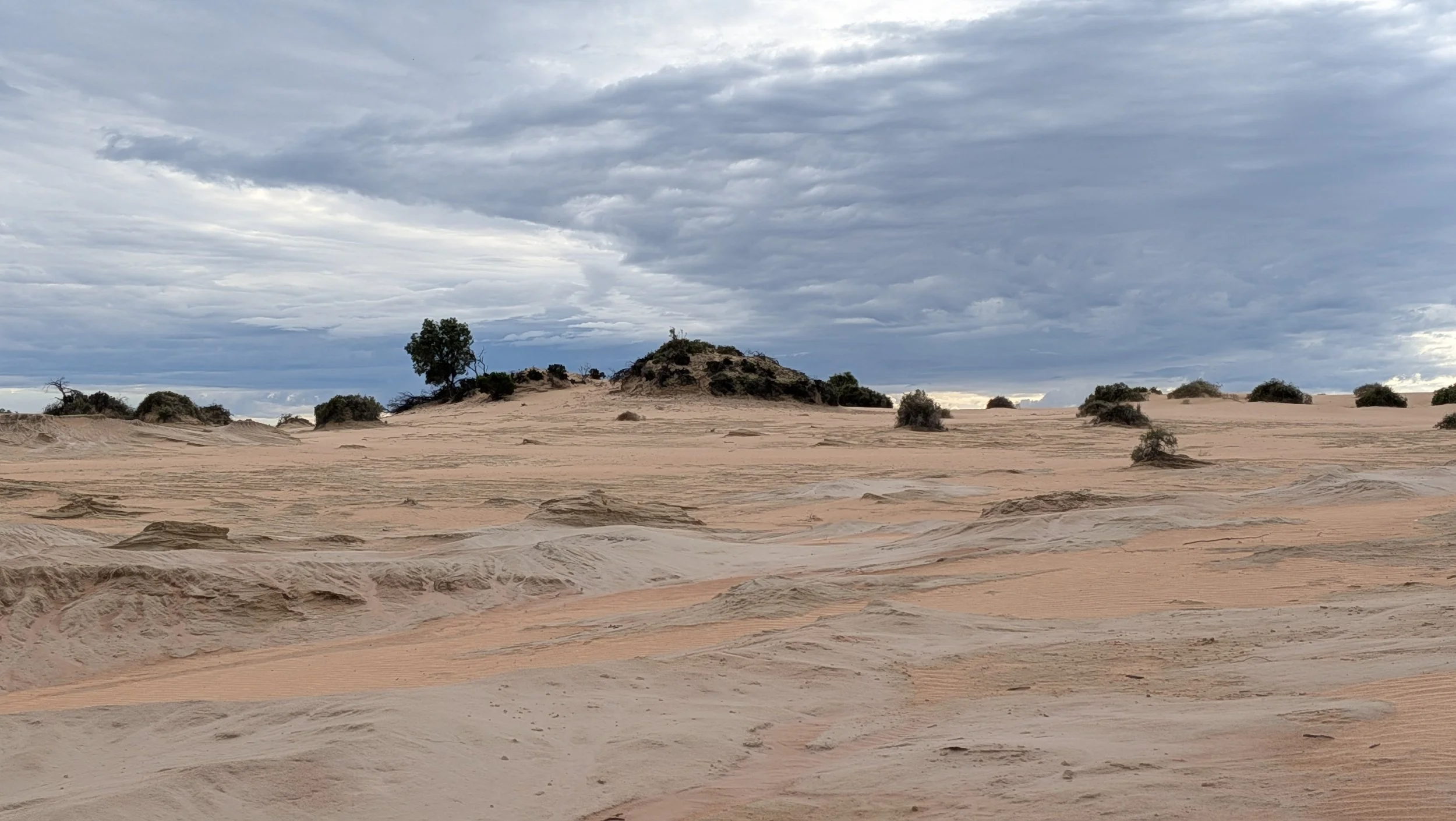
The 5in of rain per annum erodes, and the winds blow the sand to the east, uncovering the ancient history of this extraordinary place.
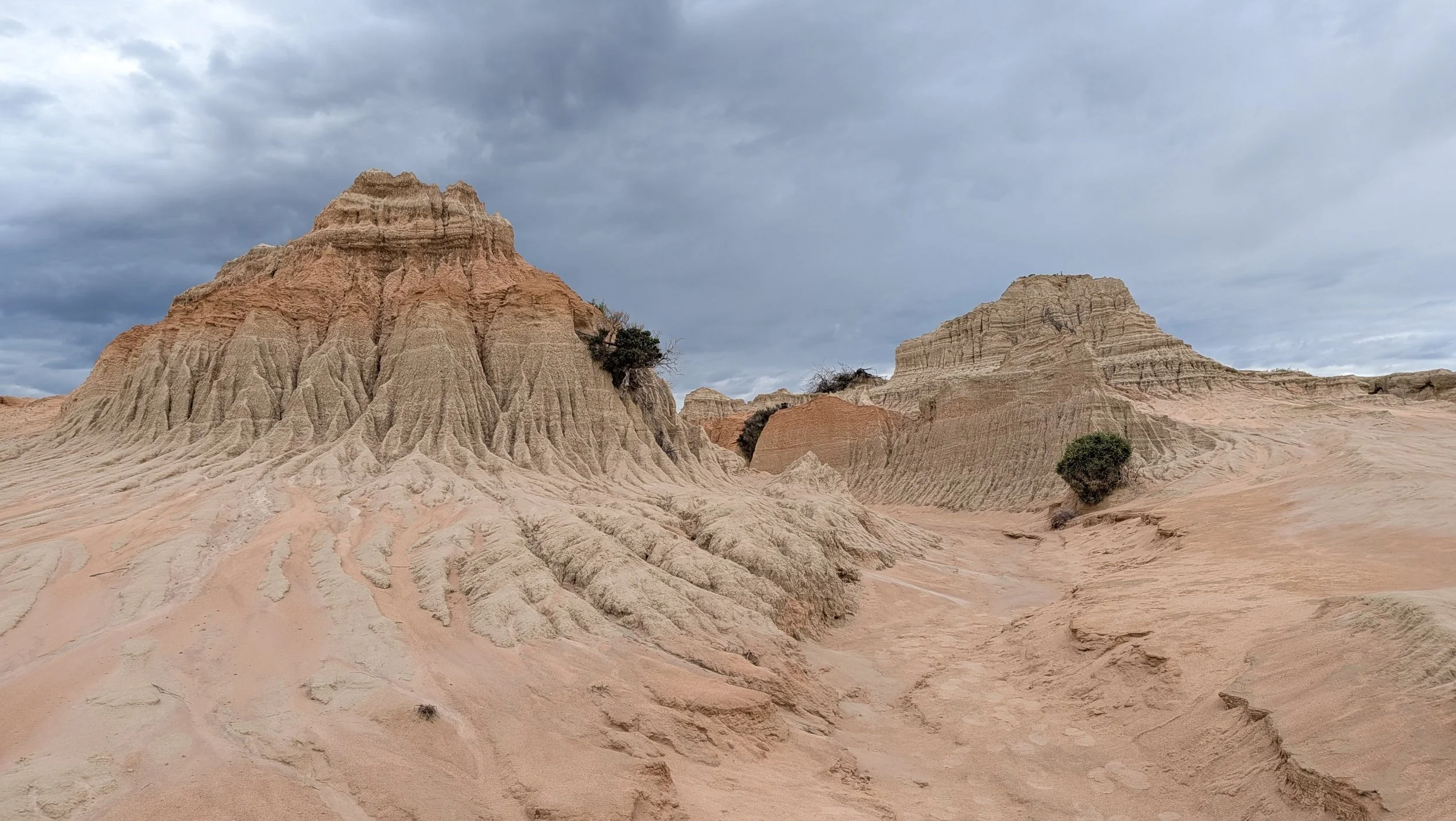
The lakes dried some 18,000 years ago. And humans lived here at least 40,000 years ago.
The white cypress pine is termite resistant and seems to have been used for everything: fence posts, buildings, and firewood.
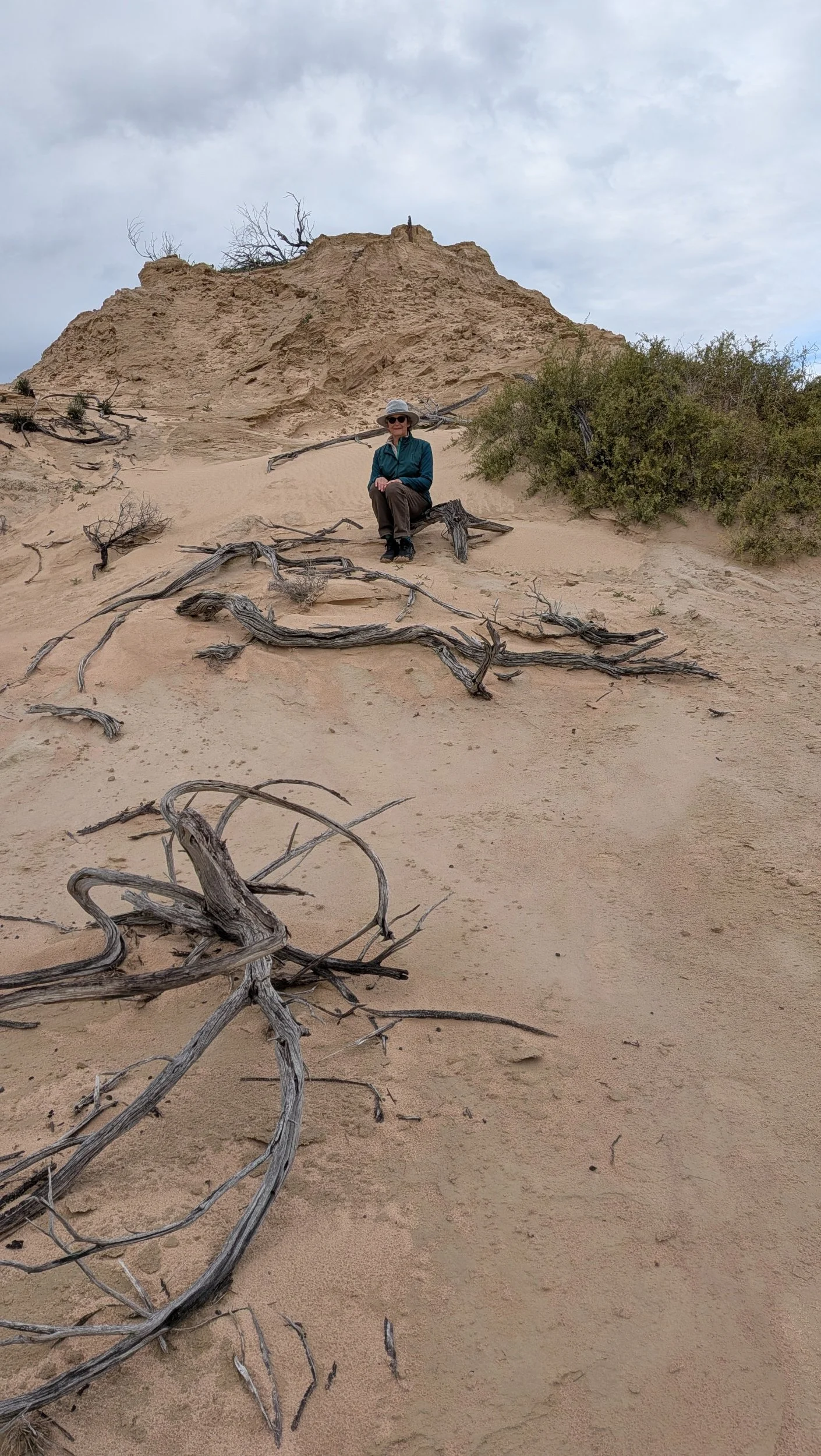
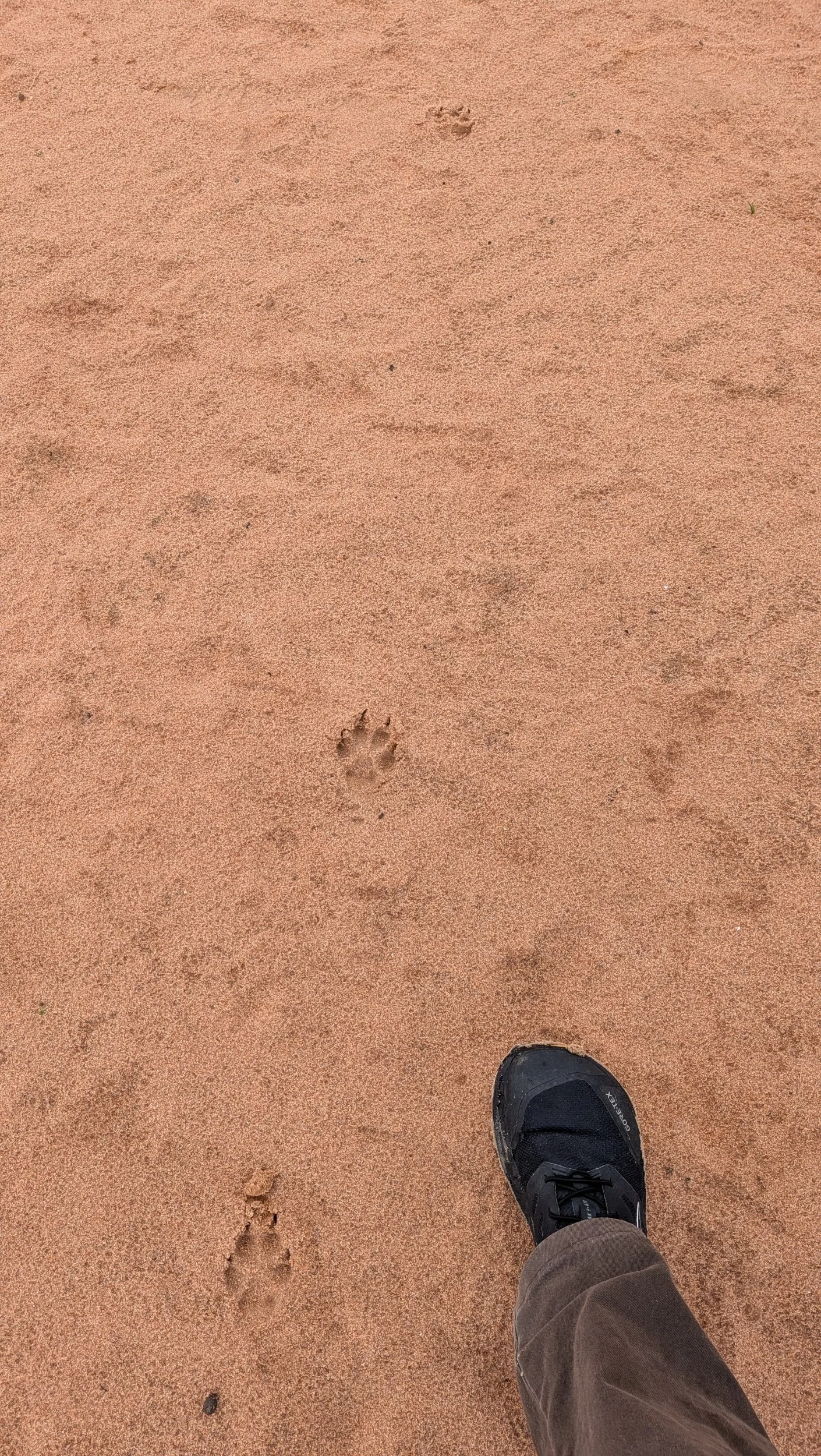
We were told these are feral cat paw prints. They're big.
Or is this a NPWS joke on unsuspecting tourists…where are its other paws and their prints?
And ancient wombat bones?…Maybe…
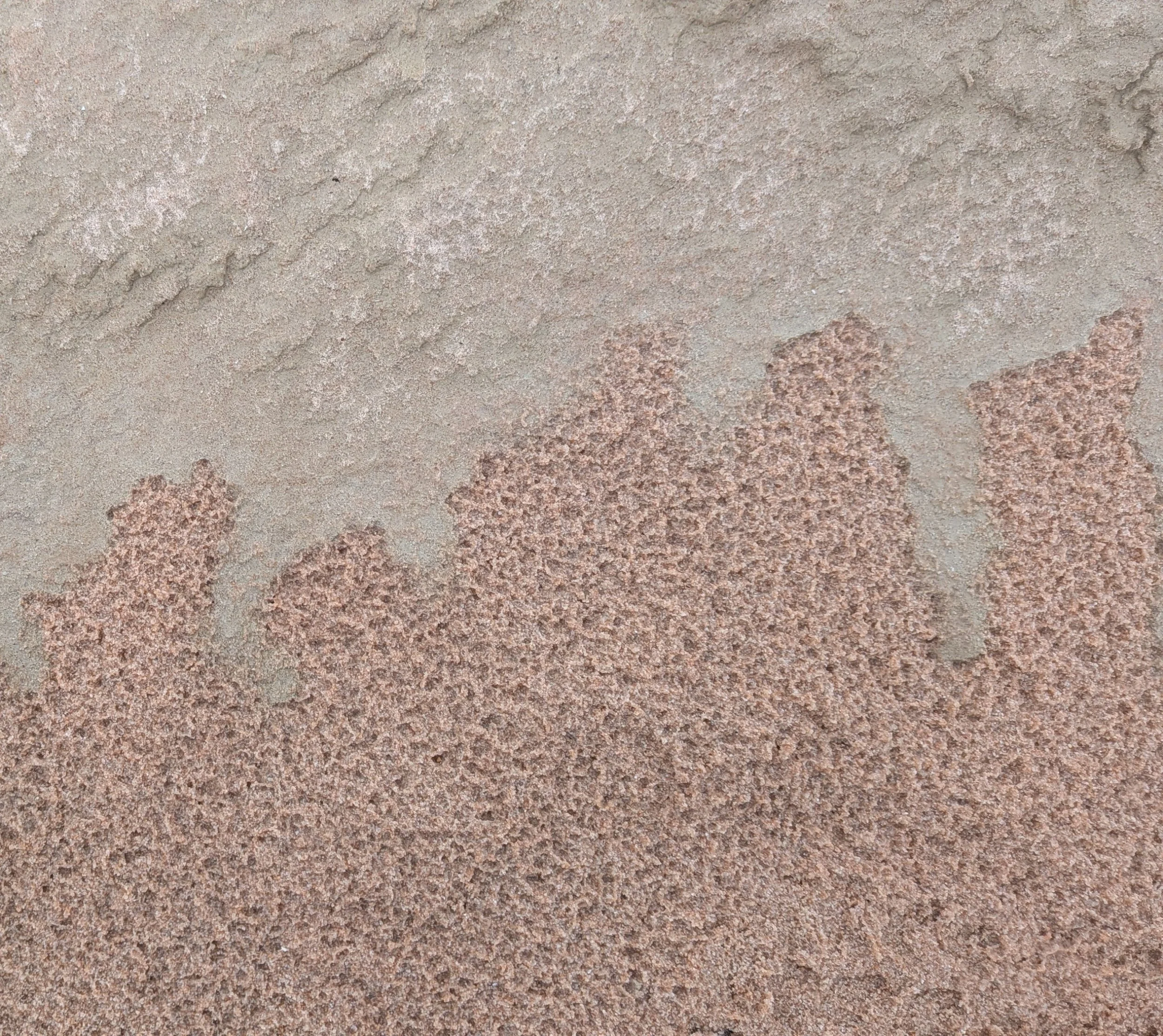
Rain spotted red sand on gray clay.
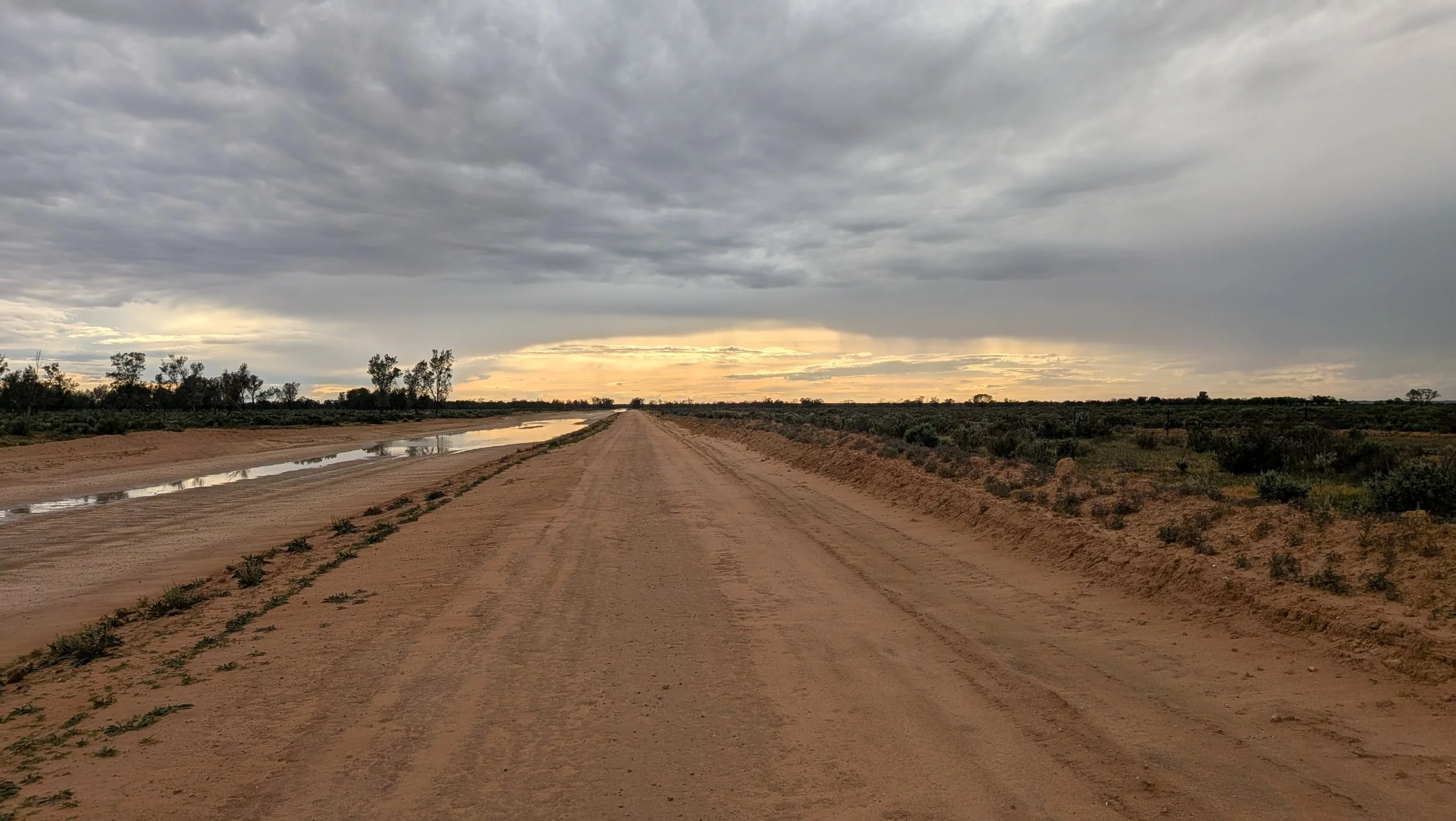
The road to Mungo from Mildura, looking east.